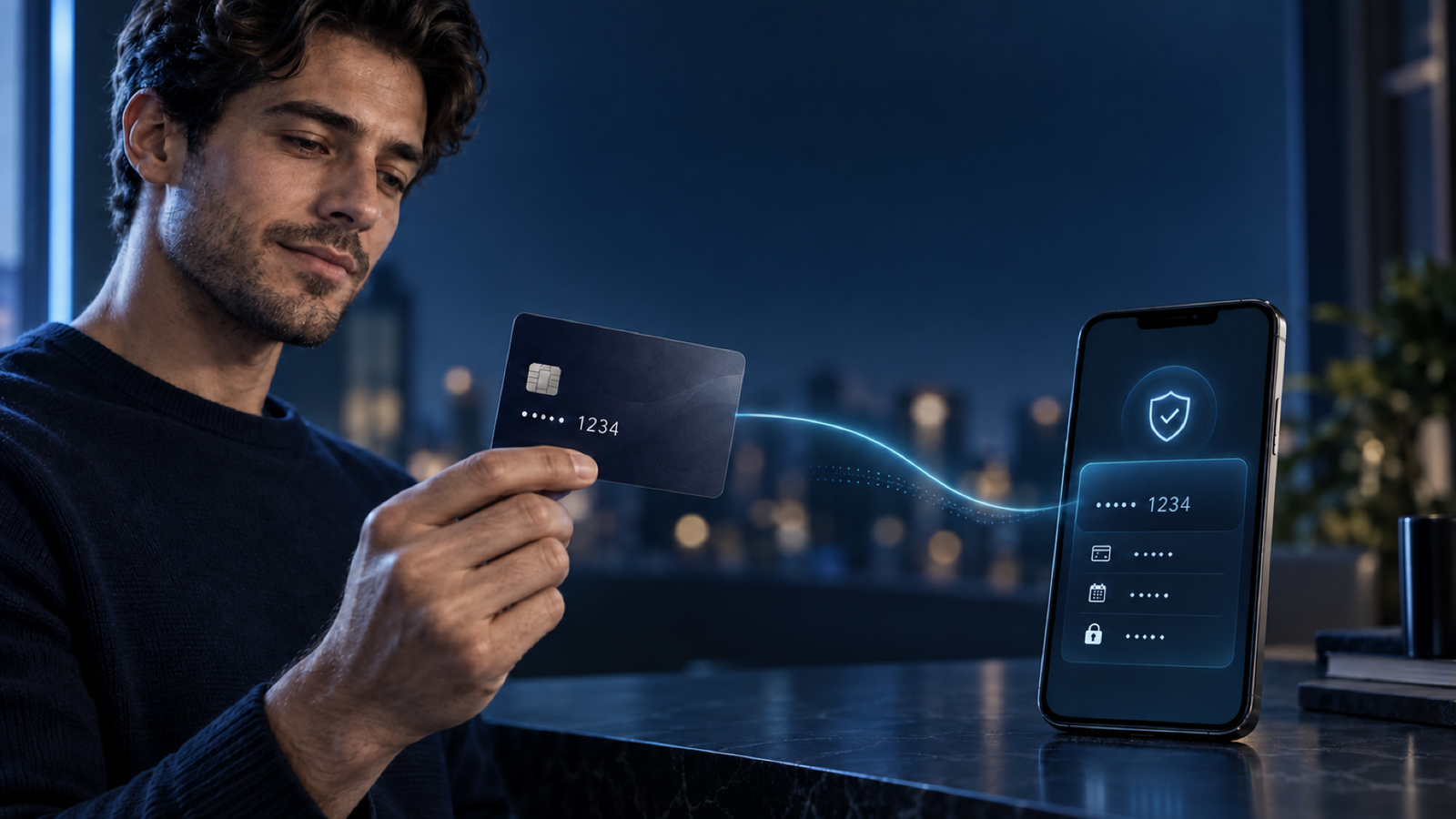
A credit or debit card has the card number, expiry date, and CVV printed on it. If someone loses that card, the person who finds it already have most of the details needed to use it online.
That makes no sense to me.
We do not print a bank account password on a debit card. We do not print a PIN on the card. The PIN is kept private because it is important. So why are the full card number, expiry date, and CVV treated differently?
A physical card should only be used to identify the card and make in-store payments. For that purpose, we do not need to print all the sensitive information on it.

Safe RFID Blocking Leather Card Holder
Elite Pro SlideX Pop Up Wallet for Men | RFID Blocking Leather Card Holder | Slim Minimalist Wallet | Aluminum Card Case | Holds 11 Cards | Coin Pocket | Premium Gift for Men

When we tap a card to pay, the payment terminal does not need us to read and type the card number, expiry date, or CVV. The card communicates securely with the payment machine through its chip or tap technology. For a larger transaction, the customer may be asked to enter a PIN. That is all that is needed.
So why should a physical card reveal the full card number, expiry date, and CVV—details that are mainly useful for online payments?
On the physical card, only the last four digits should be visible.
The last four digits are enough to identify which card is being used. They help customers distinguish between cards, especially when they have more than one. They also help banks, merchants, and customer-support teams confirm the correct card. For tap-and-pay or chip-and-PIN payments, those last four digits are enough for visual identification. The full account details do not need to be printed for the payment to work.
For example, a card could show only:
•••• 1234
The card would still work normally at a shop, restaurant, ATM, or payment terminal. Customers could tap, insert, or swipe it. If needed, they could enter their PIN. The payment system would get the required information securely from the chip or contactless technology—not from the printed text on the plastic.
The full card number, expiry date, and CVV should instead be available only inside the bank’s secure mobile app. If a customer needs to make an online payment, they can open the app, verify with fingerprint, Face ID, or password, and view the details when needed.
For people who do not use a smartphone, banks could provide these details separately through a sealed envelope sent to the registered address, secure phone banking, or a branch. The important point is simple: sensitive online-payment information should not be printed on the same object that people carry everywhere and can easily lose.
Imagine finding someone’s card on the street. Today, you can see their name, full card number, expiry date, and CVV. You may not know their PIN, so using an ATM may be difficult. But you may still have enough information to attempt online purchases on websites that do not ask for extra verification.
That is an unnecessary risk.
A lost wallet should not become a ready-made online shopping kit for whoever finds it.
If only the last four digits were visible, a lost card would be far less useful to a stranger. They could not easily use it for online payments because the full number, expiry date, and CVV would remain hidden. The customer could immediately freeze the card in their app or call the bank, but even before doing that, the damage a stranger could cause would be much lower.
Banks already have the technology for this. Most banking apps can show transaction history, freeze a card, change spending limits, reset a PIN, approve a payment, and create virtual cards. Many digital wallets already protect customers by using tokenized card details instead of exposing the real number to merchants. Hiding card details on physical cards is not a difficult idea. It is simply not yet the standard.
The current design belongs to an older era. Cards were created when people needed printed details for manual payment processing, phone orders, and paper receipts. But banking has changed. We now have secure apps, biometric login, instant transaction alerts, digital wallets, one-time passwords, and immediate card controls.
The physical card should evolve too.
A modern card should reveal almost nothing: perhaps the customer’s name and the last four digits only. It should still work for tap-and-pay, chip payments, and ATM transactions. For online payments, customers should securely retrieve the full number, expiry date, and CVV from their banking app or another protected bank channel.
A card is meant to help us pay in person. It should not carry all the information someone else needs to spend our money online.